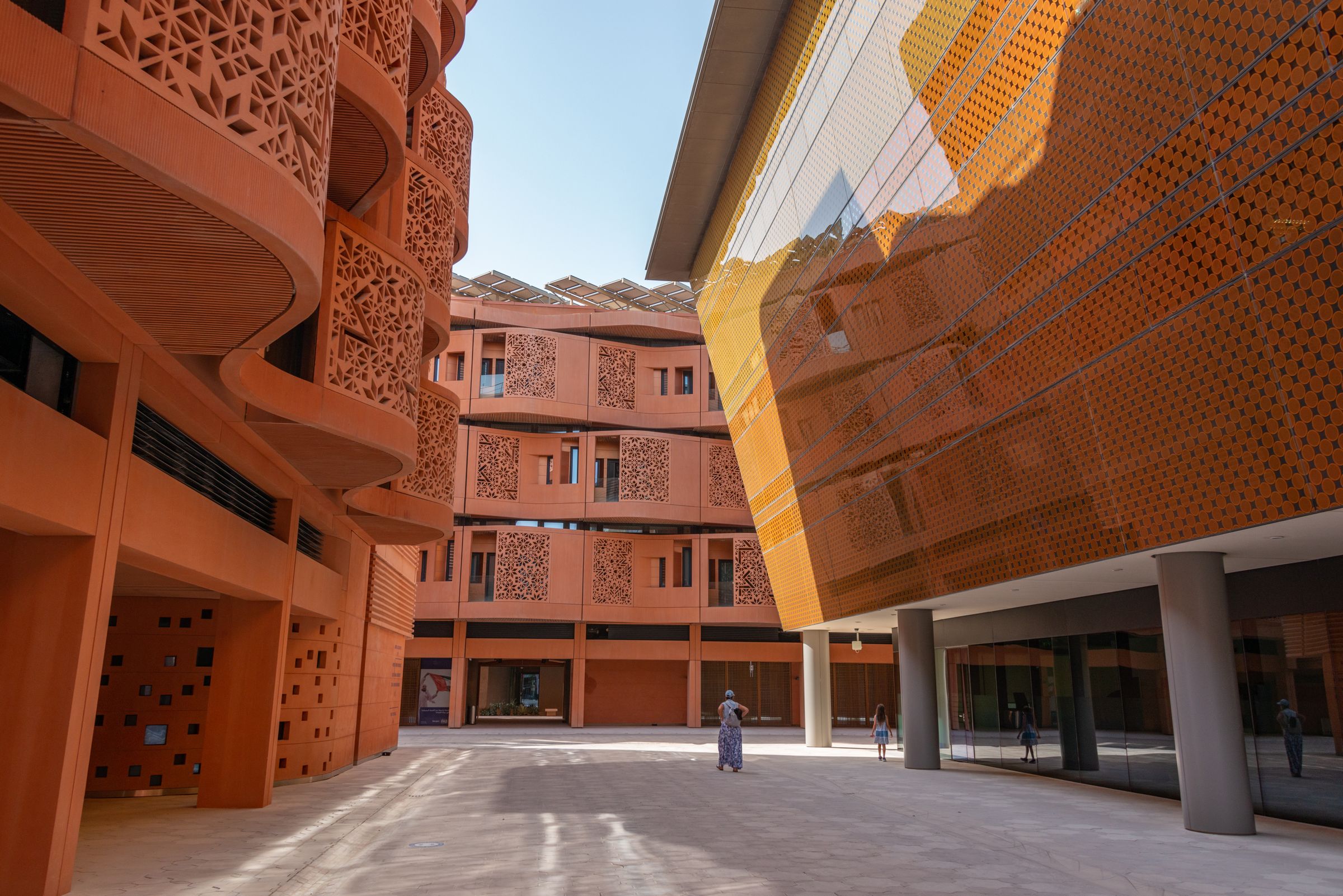
The institutions now defining Abu Dhabi’s cultural landscape were, twelve years ago, largely commitments on paper. When I arrived in 2014 to live at NYU Abu Dhabi’s campus, the museums taking shape on Saadiyat Island and the country’s stated commitment to arts and culture represented a policy direction still unfolding, a promise embodied in institutions that did not yet fully exist. What surrounded us was undeveloped desert, and what I saw there was not absence but potential: the early stage of a public project whose outcomes no one could yet specify.
That framing matters because culture, in the UAE, has been treated as something built deliberately, through institutions, investment and long-horizon planning. The words of Zaki Nusseibeh, cultural adviser to the UAE President, captured this when I read him in The New York Times during the week I moved here. “We know we cannot create culture overnight,” he said, describing the forthcoming museums, “so we can find our own voice. Hopefully, in 20 or 30 years’ time, we will have our own cultural elite, so our young people won’t have to go to London or Paris to learn about art.” It was a statement of intent about national capacity, not merely about buildings.
Today I work within that ever-widening cultural community, and the evidence of the policy is visible in people. Audiences move between museums, festivals, concerts and performances, and some who first came to watch now create work themselves. New institutions are opening, and new colleagues have become friends and collaborators. The International Day of the Intangible Cultural Heritage is a fitting moment to ask how these encounters help people draw from the past, learn from one another and build the culture future generations will inherit.
Intangible cultural heritage, by its nature, resists preservation as a fixed object. It is constantly renewed through music, storytelling, crafts, performance, celebrations and knowledge passed across generations, reinvented in real time. Communities sustain these practices through teaching and participation, adapting them as their lives change. The responsibility of institutions, then, is not to freeze tradition but to support the people who carry it forward.
This is why I think of the arts as social infrastructure, a public good with measurable effects on civic life. The arts give people with different lived experiences reasons to gather and become part of a community. A performance can begin a conversation, introduce future collaborators or persuade someone that they, too, have a story worth telling. Sustained opportunities to participate, make work and learn from others are what transform cultural investment into a lasting contribution to the life of a country.
Earlier this month, at a LiveX panel, the Royal College of Art’s Prof Adrian Lahoud compared the opportunity New York represented for earlier generations of newcomers with what Abu Dhabi and Dubai represent today. As a lifelong New Yorker, I recognise a similar energy: ambitious people arriving with different experiences and a belief that they could build a life together. Abu Dhabi’s cultural character will continue to develop from its own history, rooted in Emirati heritage and shaped by the lives and encounters of people here. Its neighbourhoods and artistic communities will look different from New York’s, and the significance of today’s beginnings may only become clear a generation from now.
Institutions can structure that development without dictating its results. The Arts Centre’s Numoo professional development accelerator gives artists practical knowledge and networks across artforms and backgrounds; people find collaborators and develop work we could not have anticipated when we brought them together, sharing stories that help others understand life here. Our annual National Day gathering, Hekayah | The Story, asks how a national narrative is created: poets and musicians from different backgrounds, selected collaboratively by curators from the UAE’s literary and performing arts communities, give the country’s many voices and languages a stage. This year’s first collaboration with Public Art Abu Dhabi extends that opportunity for shared storytelling. And the pipeline is real: I have met people who first visited us on high school trips, became NYUAD students, encountered unfamiliar performances, took workshops and became artists whose work we present and commission. A children’s matinee can open a possibility that stays with someone for years.
In the same LiveX conversation, architect Bjarke Ingels recalled Leonard Cohen’s lyric, “There is a crack in everything / That’s how the light gets in,” speaking about openings for the unanticipated in a city’s development, spaces where magic can happen. Putting that intention into practice means creating conditions for serendipity: affordable communities where artists can live near one another, meet regularly, exchange ideas and stumble upon collaborators. Urban planning can enable encounters even when we cannot predict what will follow. Some ideas will falter or change direction; others become more interesting through an unexpected contribution. A cultural scene needs room for that imperfect process, recognising that failure can be as important as inspiration.
Audiences bring their own perspectives, too. At The Arts Centre’s opening concert this season, Fanfarai, a French North African brass and percussion ensemble, shared the evening with New Orleans’s Dirty Dozen Brass Band. I noticed people clapping on different beats, bringing their own musical instincts to the performance, yet sharing the joy of being there together, creating a new common history. After shows, people tell me about friendships and experiences that have helped them make Abu Dhabi their home.
The International Day of the Intangible Cultural Heritage invites us to consider our responsibility to the practices and knowledge communities value and pass forward. Preserving and extending them means supporting people to practice, teach, perform and contribute, recognising that what they pass on will change. The promise that brought me here has become visible in the work people make and the connections they form. We can honour what they bring while leaving room for discoveries none of us could have planned. As Octavia E Butler wrote in Parable of the Sower, the subject of the first show of The Arts Centre’s inaugural season: “The only lasting truth is change.”