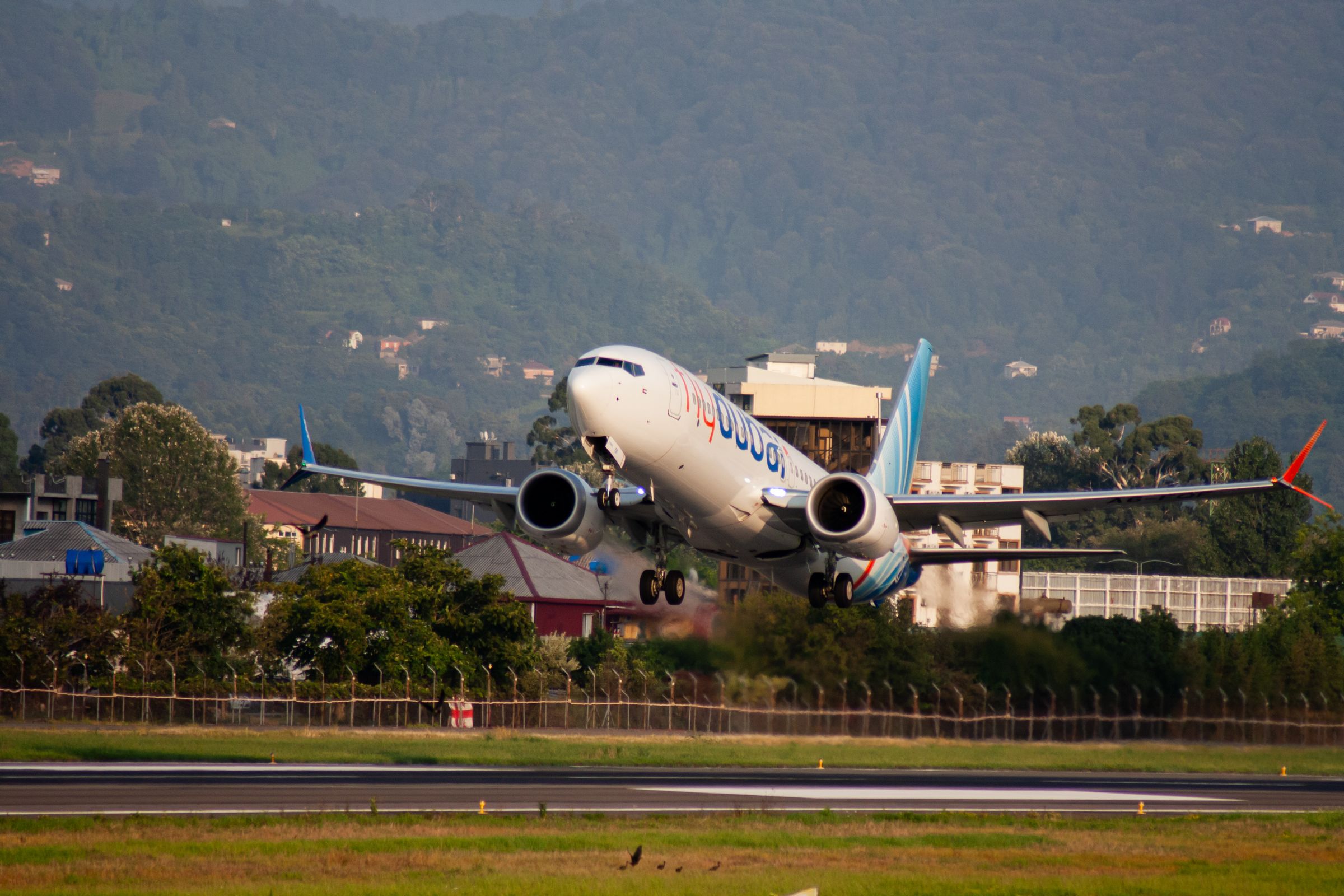
The passengers on flydubai Flight 1073 had no way of knowing, as their Boeing 737 MAX 8 climbed away from Dubai on Wednesday, that they were about to become participants in a life-or-death struggle in the cockpit above them. Reports suggest the co-pilot attacked the pilot and tried to seize control of the twin-engined jet, perhaps intending to crash it. What ended the ordeal was an extraordinary stroke of circumstance: two flydubai relief pilots, on board as ordinary passengers, fought their way into the struggle, took command and landed the jet safely at Prince Sultan bin Abdulaziz International Airport in Tabuk, in northwestern Saudi Arabia. Everyone survived. For the families and travelers who depend daily on the busy corridors linking the Gulf and Israel, that survival is the one unambiguous good news in a story that has rattled confidence across the region.
The human consequences showed themselves almost immediately. On a normal Thursday, flydubai runs 10 scheduled flights from Dubai to Tel Aviv’s Ben Gurion Airport between 5.15 a.m. and 7.15 p.m. Yesterday, all ten, including the 6.20 a.m. Flight 1073 itself, were listed as cancelled, with no clear date for their return. Among those affected were Israelis stranded in the UAE, and on Thursday El Al, Israel’s national airline, announced plans for a “rescue flight” to bring them home. The concern around that single flight is measured by reports that agents from Shin Bet, Israel’s security agency, flew to Dubai to oversee its security preparations.
Behind the cancellations lie questions that investigators in three countries are racing to answer. Inquiries are underway in Saudi Arabia, Israel and the UAE. On Thursday, the office of UAE Attorney-General Hamad Saif Al-Shamsi said measures were being taken “to collect information and evidence, to determine the truth of the incident, its circumstances, details and motives, and to verify the extent of its connection to any terrorist activity or purpose, or the existence of prior planning or direction for it.” A jurisdictional tussle appears likely. Also on Thursday, Israel’s National Security Minister Itamar Ben-Gvir called for the suspect co-pilot’s extradition from the UAE to Israel, and Miri Regev, the transport minister, demanded that all flydubai flights to Israel be halted while investigations continue.
Under international aviation law, however, Israel has no automatic right to lead the inquiry. Annex 13 to the Convention on International Civil Aviation assigns that role to the “State of Occurrence,” the country where the incident takes place. Tracking data obtained by FlightRadar24 shows the drama began and remained almost entirely over Saudi Arabia, apart from a few minutes when the aircraft briefly veered into Jordanian airspace. The UAE, as the state of registry and operation, and the United States, where the aircraft was designed and built, may appoint representatives, but unless Saudi Arabia delegates the role, jurisdiction clearly belongs to Riyadh. A fuller picture of the legal and security questions at stake can be found at https://www.arabnews.jp/en/middle-east/what-the-flydubai-flight-1073-incident-means-for-middle-east-aviation-security-3000521.
Some reports have suggested the accused co-pilot is an Omani. According to The Jerusalem Post, flydubai’s agreement to operate in Israel “explicitly states that all pilots must be from countries that have normalized relations with Israel, which does not include Oman.” Oded Ailam, a former head of counterterrorism at Mossad, said a joint investigation by Omani and Israeli security services is grappling with one central question: “How is it possible for a guy of this nationality to fly the aircraft?” One theory, he told The Washington Post, is that the man held two passports, but “that has to be answered in order to eliminate further incidents.”
The aircraft itself will be scrutinized alongside the men who flew it. Photographs taken at Tabuk showed the 737 MAX 8’s rudder had been seriously damaged, and a hunt is likely underway for the missing section, which must have fallen somewhere in the mountainous terrain east of Tabuk. Boeing and its customer airlines will want to know why the four-year-old jet, registration A6-FKR, sustained such unusual damage during or after the high-speed descent that marked the incident. The type’s history weighs heavily. According to the Flight Safety Foundation’s accident database, 737 MAX 8s have been involved in hundreds of incidents since 2018, most minor, but two catastrophic. A Lion Air jet crashed into the sea after takeoff from Jakarta on Oct. 29, 2018, killing all 189 aboard, and on March 10, 2019, an Ethiopian Airlines aircraft crashed after leaving Addis Ababa-Bole airport, killing all 157 passengers and crew. In both cases the flight-control system known as MCAS, triggered by a faulty sensor, repeatedly forced the nose down; Boeing later redesigned the system and improved pilot training.
For investigators, establishing a precise timeline should be comparatively straightforward, thanks to the survival of all aboard, air traffic control radar records and data from onboard systems, including the cockpit voice and flight data recorders. That record should reveal who was controlling the aircraft when the incident began, what was said between the flight crew, whether the sudden descent was deliberate or the result of a struggle or malfunction, and how the cockpit door was opened. But the fuller truth, most analysts agree, will come from the intense inquiries now underway into the lives of the two pilots, and from urgent reviews across the region of recruitment procedures, background security checks and the screening of airline staff at airports. Yesterday, Israel announced it would introduce its own security checks on all pilots flying into the country, with a spokesman for the prime minister’s office telling Reuters that Netanyahu had instructed authorities to “ramp up security” on all flights to Israel, whether operated by Israeli or non-Israeli carriers.
Meanwhile, the wider context is an industry still struggling to recover. The war with Iran, following the joint US-Israel attack on Feb. 28, threw regional air travel and tourism into chaos, and flydubai had only recently become the first UAE carrier to resume direct flights to post-Assad Syria in June 2025, calling the country “a key strategic market.” On the very day of the incident, IATA reported that Middle East carriers’ demand had fallen 14.6 percent year-on-year, with chief economist Marie Owens Thomsen noting that “the recovery trajectory for carriers in the Middle East was interrupted.” Emirates has already suspended the codeshare flights operated by flydubai aircraft “with immediate effect, until further notice,” while Etihad’s six daily Tel Aviv flights were still operating as of yesterday. For the travelers, crews and communities whose livelihoods rest on those routes, the coming months will show whether confidence, once broken in a single terrifying ordeal over Saudi Arabia, can be rebuilt.